OPINION · August 6, 2026 · 7 min read
Why We Decided to Build Duzz
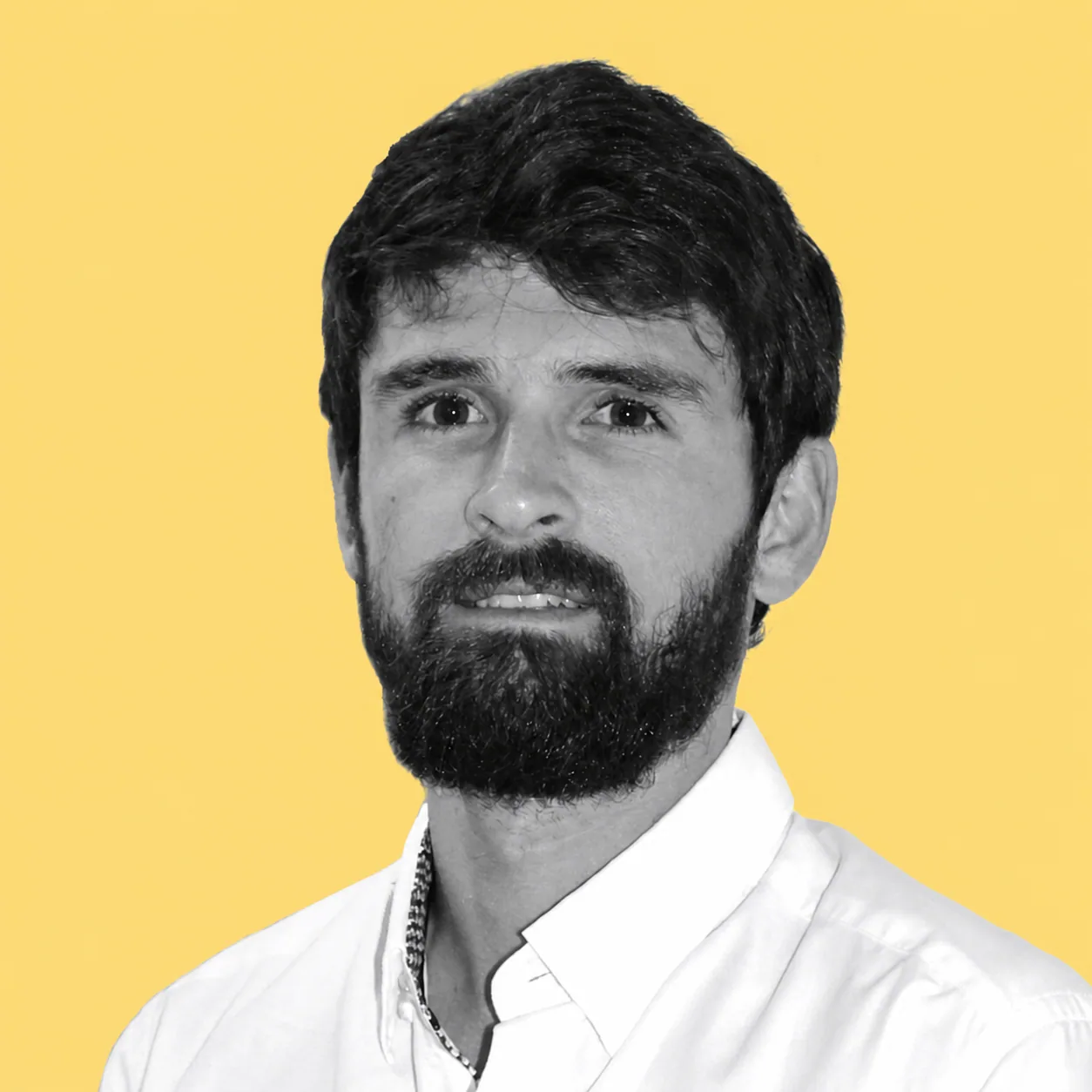
People often ask us why we decided to build DUZZ. The honest answer is that it didn't come from a pitch deck or a market report. It came from years spent building alongside one of the fastest technological shifts our industry has ever seen.
Roy and I met more than ten years ago during our military service. Over the years we worked on different projects, but we always shared the same curiosity for new technology. In 2018, while I was running a hedge fund, I brought Roy a problem I was trying to solve. That was the first time he showed me what today everyone calls large language models. Nobody was talking about ChatGPT yet. We were experimenting with early models like Google's BERT, trying to understand where this technology could eventually go. It was obvious that something important was happening. For the next few years, we kept building, experimenting, and following the progress obsessively.
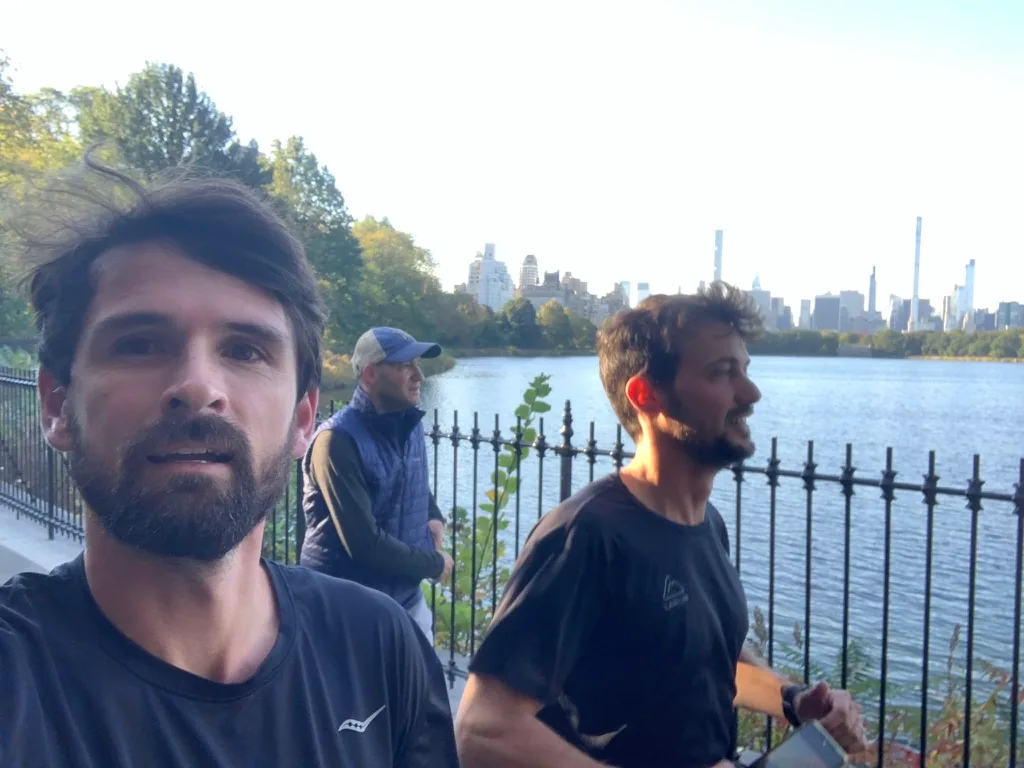
2022 NYC - Closing our first customer in the US
Then ChatGPT arrived.
Almost overnight, AI went from an academic topic to the center of every board meeting and product roadmap. For us, it felt like years of curiosity had suddenly become relevant, and more importantly, companies started reaching out. Large enterprises weren't asking theoretical questions anymore. They wanted working systems, and they wanted to understand what AI could actually do for their business. The timing felt right.
The market was chaos. Every week new technology launched, every month a new framework, and every quarter someone declared that everything had changed again. Building a startup on assumptions in that environment felt irresponsible.
Let’s do Service.
Instead of running into a wall with a new product, we did something that in hindsight was probably the best decision we could have made. We founded Neradot, “Your AI Partner,” not as a consulting company, but as a company that builds. We had one rule from day one: no PowerPoint consulting, no strategy workshops, no reports that end up in a drawer. If a customer came to us, we built the solution as the leaders of the team.
That decision shaped everything that followed. Our goal wasn't only to generate revenue, it was to maximize learning. We wanted to be as close to the industry as possible, to understand where AI genuinely created value and where it was little more than marketing. We believed that if we solved enough real problems, we would eventually find one large enough to justify leaving a successful services business behind and dedicating ourselves entirely to a product.
That hypothesis turned out to be correct. Over the following years Neradot worked with companies across cybersecurity, payments, crypto, financial services, and enterprise software, building AI systems for startups and established organizations alike, including well-known fortune 500 companies. Looking back, those projects were far more valuable than any market research report could have been. Every one of them taught us something, and over time patterns started to emerge.
“Your AI Partner,” not as a consulting company, but as a company that builds.
The pattern that became a company
One of those patterns was the rise of vision in models. Around the time vision-language models started becoming practical(2025), we noticed a real jump in what computers could suddenly understand. Until then, most AI work revolved around text. Now models could interpret interfaces, reason about screens, and understand visual workflows. If language models changed how people interact with information, vision models is about to change how software interacts with software. That caught our attention immediately.
The moment everything clicked came during a vision project with a well-known gaming company. The project was about QA. Like most people outside the gaming industry, we assumed test automation had already solved most of the problem. It hadn't. The deeper we went, the more surprising it became: automation had largely skipped gaming. Not because nobody tried, but because games are fundamentally different. They change constantly, the interface evolves every sprint, animations affect interactions, randomness is part of the experience, live events come and go, and entire in-game economies get rebalanced weekly. Maintaining traditional automation often became almost as expensive as maintaining the game itself.
The more we talked to QA managers and CTOs, the more we realized this wasn't an isolated problem. The industry had been trying to solve it for years. The technology simply wasn't ready. And that was exactly the interesting part. We weren't looking for an industry that wanted AI because investors expected it. We were looking for an industry with a real problem that had been waiting for the right technology. Gaming checked every box. It hadn't seen a fundamental shift in QA for decades, it had real budgets, it was growing fast, and it was full of people who genuinely enjoy experimenting with new technology.
That last point mattered more than we expected. The gaming community is remarkable. The Israeli ecosystem is incredibly strong, and the same is true globally. Studios are constantly experimenting, validating new ideas, and looking for better ways to build, which makes them exceptional design partners for an early-stage company. We weren't looking for customers. We were looking for partners who wanted to grow with us.
Our thinking became simple. If we want to create a real impact, let’s solve the complex environment out there first; if we can make it work in gaming, everything else gets easier. That is exactly what we're seeing. The complexity of games forces us to build systems that are far more robust, flexible, and intelligent than a typical business application would ever require. Once those systems work inside a game, most other software starts to feel simple by comparison. We're solving the harder problem first.
Companies are investing heavily in AI, the demos are impressive, and the first stage always feels magical, but eventually every executive asks the same question: where is the return? We believe QA is one of the rare areas where AI can fundamentally change how the work gets done, rather than just making an existing workflow slightly faster. The technology isn't finished, and it's still early, but for the first time it feels genuinely aligned with the problem.
The Agents “duzz” it for you
Where we are today
Since inception, Duzz has partnered with the most recognizable names in the gaming industry, including Fortune 500 companies.
From day one, we set out to build an AI-first company, and to us that isn't a slogan, it's an operating model. We're accomplishing roughly ten times more with one-sixth of the team we had at our first company (Larium). AI isn't something we bolt onto our workflows. It's woven into almost every part of how we build, decide, and ship.
Our focus is intentionally split between two worlds. The first is the present. We spend every day on real customer problems, building a solution while laying the technological foundation for future opportunities.
The second is research. We spend a significant part of our time exploring, challenging assumptions, and experimenting with new patterns. We believe that if you're only building what's already obvious, you're probably too late.
To make that concrete, one area we're especially excited about is understanding how AI agents behave. Not just how they complete a task, but how they make decisions, how they stay consistent over time, and whether you can give them distinct personalities and behavioral patterns without sacrificing reliability. That's a challenging problem, and we think it's going to matter more as agents become part of everyday software. What you could actually build on top of that is a much bigger one, and I'll write about it soon.